Tenant, landlord, or condo board: learn who is legally responsible for snow and ice removal in winter to prevent accidents and liability claims.
Every winter, heavy snowfall and freezing rain turn driveways, walkways, and balconies into hazardous skating rinks. Beyond convenience, snow and ice removal is a legal obligation designed to prevent slips, falls, and serious injuries. Yet, between landlords, tenants, and condo associations, confusion often arises over who should pick up the shovel and spread the salt. Here is a clear breakdown of everyone’s responsibilities.
1. Residential Rentals: Landlord or Tenant?
In a residential lease, snow and ice removal duties depend primarily on whether an area is for exclusive or shared use, as well as the specific terms outlined in the lease agreement.
-
Private Access (Exclusive Use): If you rent a single-family home or a unit with a private entrance, exterior staircase, or balcony for your exclusive use, snow and ice removal generally falls to you as the tenant.
-
Common Areas: In multi-unit buildings (duplexes, triplexes, apartment complexes), the landlord is responsible for maintaining shared spaces, including main entrances, common stairways, walkways, parking lots, and paths to garbage/recycling bins.
-
What the Lease Says: A landlord may assign snow removal duties for a common area to a tenant, provided this is explicitly stated in the lease (often in exchange for a rent reduction). Without a written clause, the responsibility remains with the landlord.
Good to know: Even when a lease assigns snow clearing to a tenant, landlords still retain a legal duty of care toward third parties (mail carriers, delivery drivers, visitors) and must ensure the premises remain safe.
2. Condominiums: The Role of the Condo Association
In a condominium, responsibilities are divided between common and private elements:
-
The Condo Syndicate / Association is responsible for clearing snow and ice from common areas (outdoor parking lots, shared walkways, main entrances, and roofs). They typically hire a professional snow removal contractor.
-
The Co-owner is responsible for maintaining private areas or limited common elements (such as a private balcony or patio), unless the declaration of co-ownership states otherwise.
3. What About Public Sidewalks and Streets?
Clearing public roadways and municipal sidewalks is the responsibility of the municipality. However, local bylaws strictly prohibit shoveling or blowing snow from your private driveway onto public streets or sidewalks. Doing so can result in municipal fines.
4. Legal Liability and Insurance: Why De-icing Matters
Under civil law principles, property owners and occupants have a duty to maintain safe premises. If a delivery person, guest, or passerby slips on an untreated patch of ice on your property, you could be held civilly liable for their injuries.
-
For Landlords: Ensure your property insurance includes comprehensive civil liability coverage and keep records of winter maintenance (receipts for de-icing salt, snow removal contracts).
-
For Tenants: Carrying tenant insurance with personal liability coverage protects you if an accident occurs in an area under your responsibility.
3 Quick Tips for a Safe Winter
-
Clear snow promptly after every snowfall or freezing rain event before it gets compacted into ice.
-
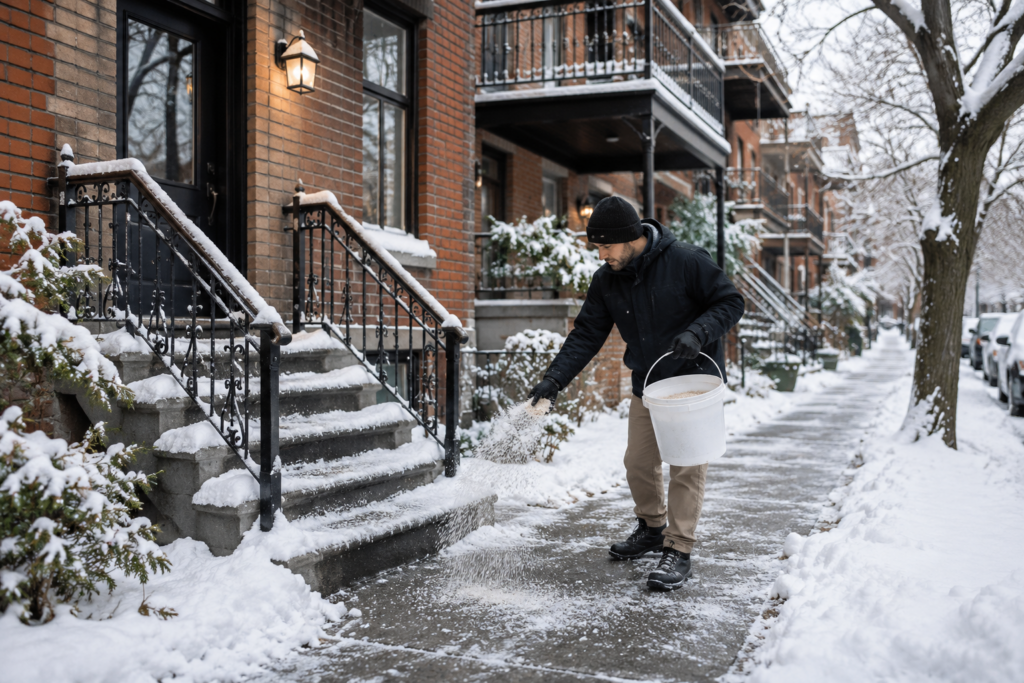
Use the right de-icers: apply rock salt (effective down to -10°C / 14°F) or sand/gravel during extreme cold spells for instant traction.
-
Keep a maintenance log if you own or manage a building, especially during severe winter storms.
Looking for reliable support to manage or maintain your spaces this winter? Reach out to our team today to explore tailored solutions for your property!