

Signing a lease is a pivotal moment for tenants and landlords alike. Every year, the Espace Nord team sees firsthand how certain clauses or obligations of Quebec’s residential lease remain misunderstood, sometimes to the detriment of both parties. Here are the seven key points we systematically verify before every signature.
1. The Mandatory Tribunal administratif du logement Form
Since September 1, 1996, every residential lease in Quebec—whether for a room, apartment, condo, or house—must be drafted using the form prescribed by the Tribunal administratif du logement (TAL). This standardized form outlines all essential information: identification of the parties, description of the dwelling, lease duration, monthly rent, included services and equipment, building rules, and special clauses.
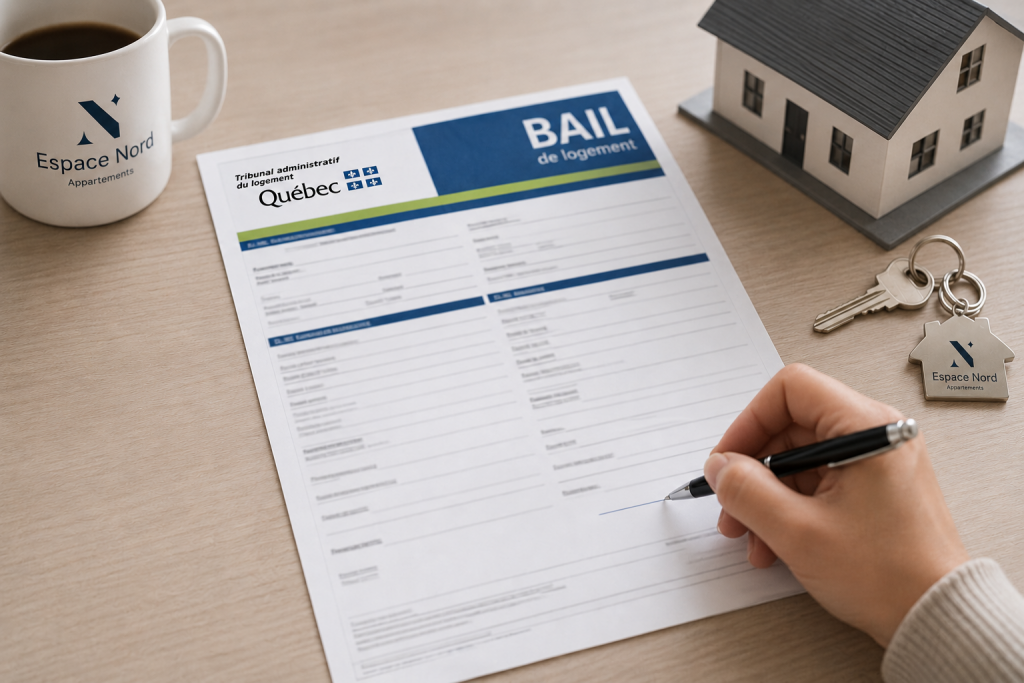
2. Complete Identification of the Parties
The lease must state the full name, address, and contact details of the landlord (or their representative) and the tenant. If the landlord is a corporation, the name of a director must also appear. Incomplete identification can complicate any future proceedings before the TAL.
3. Section G — The Lowest Rent Paid in the Last 12 Months
This is one of the most frequently overlooked points—and one of the most costly for an ill-advised landlord. When signing a lease with a new tenant, Section G must state the lowest rent paid for the dwelling during the previous 12 months. Omitting this information gives the tenant the right to apply for a rent fix before the TAL, sometimes months or even years after signing.
4. Lease Duration and Renewal Terms
A fixed-term lease automatically renews upon expiration unless a notice of modification or non-renewal is delivered within legal deadlines. These timeframes vary based on the lease duration and must be followed to the letter to be valid.
5. Prohibited or Void Clauses
Certain clauses are void even if signed: waiving rights guaranteed by law, discriminatory clauses, illegal late payment penalties, or fees not provided for by law. A void clause protects neither the tenant nor the landlord in the event of a dispute before the TAL.
6. Tenant Liability Insurance
As explained in our dedicated article, a clause requiring proof of personal liability insurance is valid and strongly recommended. It must be clearly stated in the lease, along with the minimum required coverage amount.
7. Move-In Inspection Report
While not legally mandatory, documenting the condition of the dwelling at move-in—using timestamped photos and a report signed by both parties—protects both tenant and landlord should a disagreement arise at the end of the lease.

At Gestion Immobilière Espace Nord, every lease is vetted against this checklist prior to signing. Tenants and landlords, feel free to contact us with any questions regarding your upcoming lease.